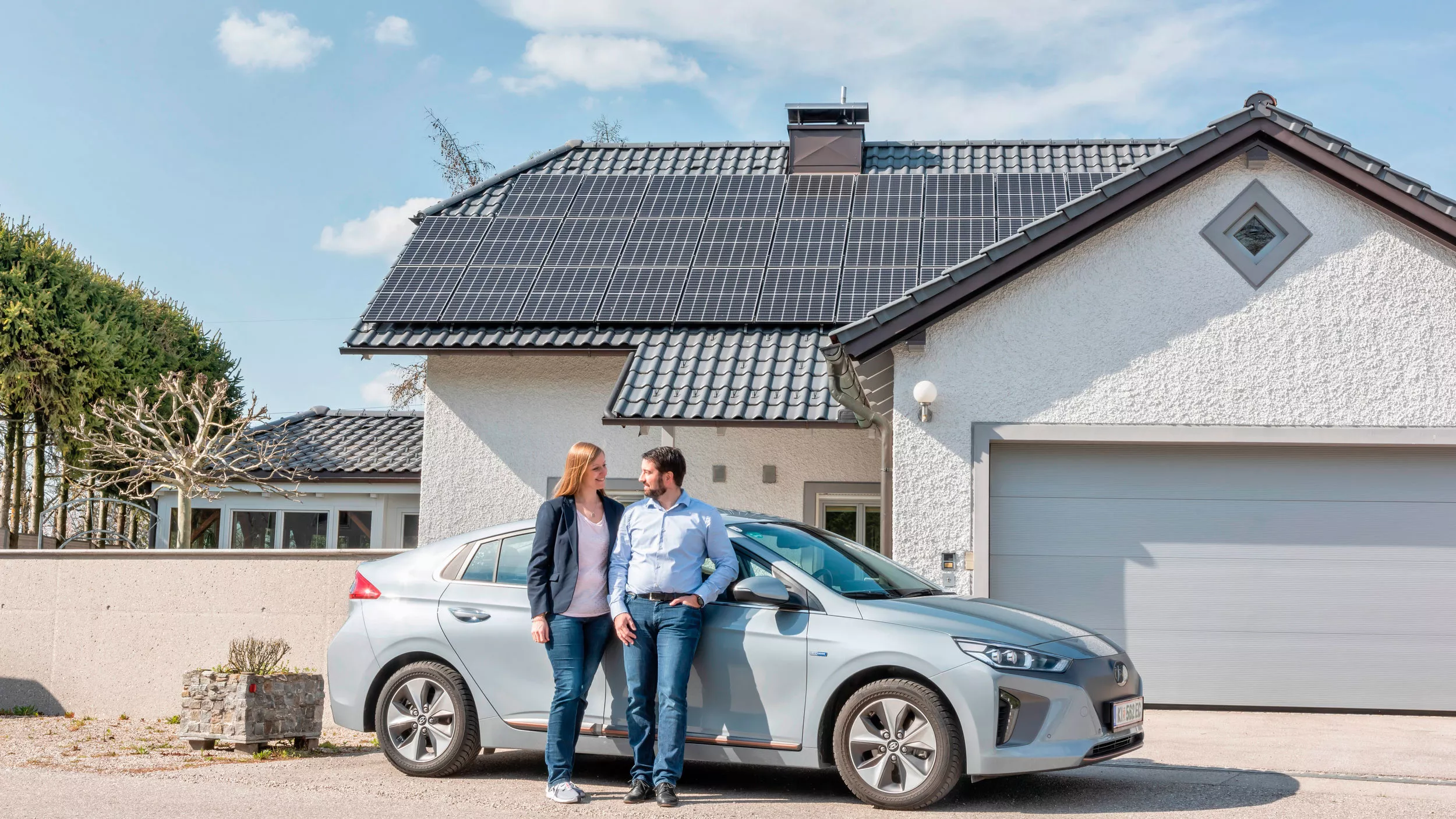
Imagine this: a storm knocks out the power in your neighborhood. Houses go dark. Not yours. Your lights stay on, your fridge hums, and your Wi-Fi stays live—all powered by your electric car sitting in the driveway. Sounds like science fiction, right? Well, it’s not. This is the promise of Vehicle-to-Grid, or V2G, technology. And honestly, it’s poised to turn our entire relationship with energy on its head.
Let’s dive in. At its core, V2G is a bidirectional charging system. Your EV doesn’t just suck power from the grid; it can push stored energy back to it. Think of your EV battery not as a gas tank, but as a massive, mobile power bank. One that’s parked 95% of the time. The potential here is, frankly, staggering.
How Does V2G Actually Work? The Nuts and Bolts
Okay, so how does this magic happen? It starts with a special bidirectional charger—different from your standard EVSE (that’s Electric Vehicle Supply Equipment, by the way). This clever bit of kit converts the alternating current (AC) from the grid to direct current (DC) to charge the battery, and then flips it back to AC when it’s time to send juice home or to the grid.
Here’s the deal with the main flows of energy:
- Grid-to-Vehicle (G2V): The standard charging we all know. You plug in at night when rates are low.
- Vehicle-to-Home (V2H): Your car powers your house during an outage or during peak price hours. This is your personal backup generator.
- Vehicle-to-Grid (V2G): Your car sells excess energy back to the utility grid, helping to stabilize it and putting money in your pocket.
The brain behind the operation is an energy management system. It communicates with the grid, knows electricity prices in real-time, and understands your driving schedule. It makes the decisions: charge now, discharge now, hold. All automatically.
Why Should You Care? The Tangible Benefits for Homeowners
Sure, the tech is cool. But what’s in it for you? A lot, actually.
Energy Independence and Resilience
With V2H, you gain incredible resilience. Wildfires, storms, heatwaves—grid outages are becoming more common. Instead of a noisy, fume-spewing gas generator, your silent EV can keep essential circuits running for days, not just hours. It’s peace of mind, plugged into your garage.
Serious Cost Savings
This is where it gets exciting for your wallet. Many utilities have time-of-use rates. Electricity is cheap at 2 AM, expensive at 6 PM. So you charge your car cheaply overnight, and then use that stored energy to power your home during the expensive peak period. You’re arbitraging the energy market from your kitchen. Some pioneers even earn hundreds a year by letting the utility tap their battery for grid services.
A Greener Grid for Everyone
Here’s the bigger picture. Solar and wind are fantastic, but they’re intermittent. The sun sets. The wind stops. What then? A network of thousands of EV batteries can act as a massive, distributed buffer. They can store renewable energy when it’s plentiful and release it when it’s needed. Your car helps smooth out the green energy bumps.
The Flip Side: Challenges and Real-World Hurdles
Now, V2G isn’t a perfect utopia—not yet. There are real speed bumps on the road to adoption.
Battery Degradation Worries: This is the big one. Every battery cycle (charge and discharge) wears it down a tiny bit. Will V2G accelerate that? Manufacturers are cautious. The consensus, though, is that smart, shallow cycling—avoiding the extremes of full and empty—minimizes impact. The financial gains might well offset a negligible degradation rate.
Hardware and Software Costs: Bidirectional chargers are pricier than standard ones. And you need a compatible home electrical setup and, crucially, a compatible car. Not many are on the market yet.
Regulatory and Utility Hurdles: The rules are still being written. Not all utilities are set up to buy power from customers in this way. Interconnection standards, safety protocols, and fair compensation models are all works in progress.
| Current Limiting Factor | Why It’s a Hurdle | The Trend |
| Vehicle Availability | Only a few models (e.g., Nissan Leaf, some Ford F-150 Lightnings) support it. | Major automakers are announcing plans; it’s becoming a key feature. |
| Charger Cost | Bidirectional units can cost 2-3x a standard Level 2 charger. | Prices are dropping as technology scales and competition grows. |
| Utility Programs | Pilot programs are limited and geographically scattered. | More utilities are launching V2G and V2H incentives due to grid needs. |
Getting Started: Is V2G Ready for Your Home?
So, can you do this today? Maybe. It’s not a simple plug-and-play for most, but the path is getting clearer. If you’re considering future-proofing your home energy system, here’s a quick roadmap:
- Check Your Vehicle: Do you own or are you planning to buy a bidirectional-capable EV? This is step zero.
- Talk to Your Utility: See if they have a V2G or V2H pilot program. They might have incentives or specific equipment requirements.
- Consult a Qualified Installer: This isn’t a DIY project. You need an electrician experienced in EV chargers and, often, home energy management systems.
- Run the Numbers: Factor in the higher upfront cost against potential savings, resilience benefits, and any available rebates.
For many right now, focusing on Vehicle-to-Home (V2H) for backup power is the more immediate and practical goal. It sidesteps some utility red tape and delivers that priceless outage protection.
The Road Ahead: More Than Just a Tech Trend
We’re on the cusp of a fundamental shift. Our cars are transforming from purely mechanical beasts of burden into intelligent, mobile energy assets. The garage is becoming the most important room in the house for energy management.
This isn’t just about gadgets or even savings. It’s about reimagining infrastructure from the bottom up. A decentralized, resilient, and cleaner energy grid, powered in part by the collective battery capacity of millions of electric vehicles. It turns every driver into a potential energy citizen—a participant in the system.
The technology, honestly, is the easy part. The real work is in the integration—the policies, the business models, the social adaptation. But the direction is clear. The future isn’t just electric; it’s bidirectional. And it’s parked in your driveway.